Patient Problem
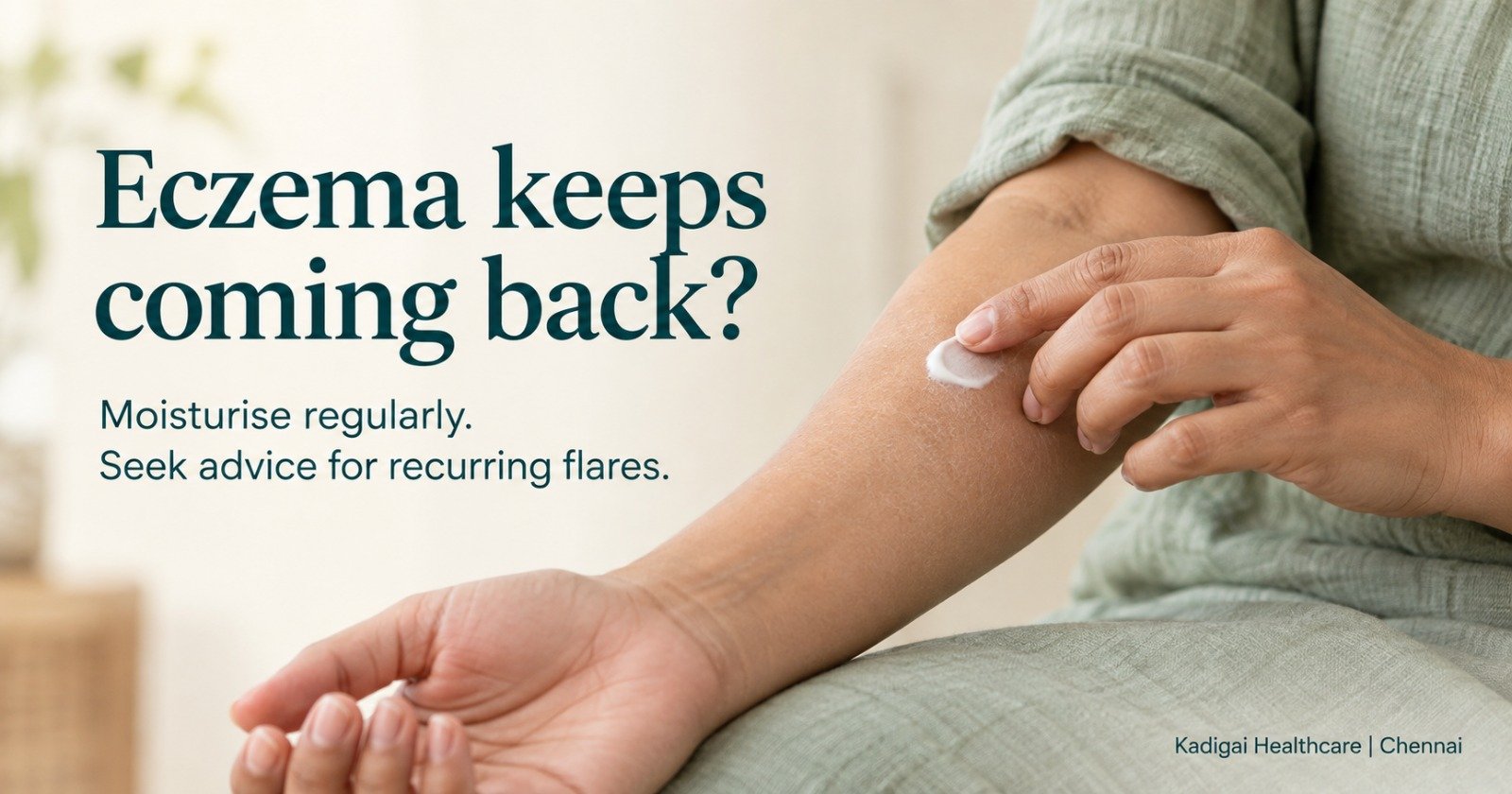
For most people, eczema starts the same way: a patch of dry, itchy skin, a trip to the pharmacy, and an eczema cream. If your eczema cream not working, or the same flare keeps returning, it may be worth looking beyond the cream itself. Moisturisers, fragrance-free lotions, barrier creams, the occasional medicated ointment — it’s a reasonable first response. For many flare-ups, it genuinely helps. The skin calms down, the itching eases, and life moves on.
The frustration shows up later. The same patch flares again a few weeks on. A cream that worked well last time barely touches this flare. Some people end up with a small shelf of half-used tubes, each one promising relief, none of them making the pattern stop.
That cycle — real but temporary relief, followed by the same flare returning — usually means the cream is doing its job on the surface. Possible factors contributing to the recurring pattern may not yet have been identified. Eczema is also a naturally relapsing condition, so some recurrence happens even with good skin care.
Doctor’s Explanation
What does an eczema cream actually do?
Eczema (atopic dermatitis is the most common form) involves two things happening together. The skin’s outer barrier doesn’t hold moisture as well as it should. And the immune system reacts more readily to everyday triggers — dust, sweat, certain fabrics, weather changes, some soaps — than it would on non-eczema-prone skin.
A plain moisturiser or emollient works mainly on the first part of that picture. It sits on the skin and slows water loss. That’s why consistent moisturising is considered a basic, foundational part of eczema care by dermatology bodies such as the National Eczema Association and the American Academy of Dermatology.
A prescription topical treatment is different — it acts directly on the inflammation itself, not just the barrier, which is why a doctor may add one during an active flare.
What a moisturiser alone doesn’t do is explain why the barrier keeps breaking down in the first place. It won’t tell you why a flare shows up this week and not last week. That’s a different question, and it’s the one that tends to matter most for anyone whose eczema keeps coming back in the same pattern.
Which eczema cream is best?
There isn’t a single “best” cream that works for everyone. It’s worth being suspicious of anything that claims to be. The right choice depends on where the eczema is, how dry the skin is, and what’s been irritating it.
As a general rule, thicker ointments and creams hold moisture longer than thin lotions. Fragrance-free, dye-free formulations are safer starting points than heavily scented ones, since fragrance is one of the more common irritants for eczema-prone skin.
Applying moisturiser within a few minutes of bathing, while the skin is still slightly damp, makes a noticeable difference — regardless of which product is used.
Which body wash is best for eczema?
A gentle, fragrance-free, soap-free cleanser is generally kinder to eczema-prone skin than a standard bar soap or a heavily fragranced body wash. Both of those can strip natural oils and leave skin drier than before. Lukewarm water matters just as much as the product itself: hot water feels soothing in the moment but tends to dry the skin further afterward.
Will triple antibiotic ointment help eczema?
Not usually, and it’s worth being careful here. Antibiotic ointments are formulated for infected cuts and wounds, not for eczema itself. Using one on skin that isn’t infected won’t address the underlying dryness or inflammation, and it can occasionally irritate sensitive skin further.
If a patch of eczema looks infected — increasing redness, warmth, swelling, pus, or a yellow crust — that’s a reason to see a doctor. Reaching for an antibiotic ointment on your own isn’t the right next step.
Treatment Approach
Why Is My Eczema Cream Not Working?
For a lot of patients, the honest answer is that a cream was never going to answer that question on its own. At Kadigai Healthcare, Dr. K. Purushothaman’s evaluation looks beyond the visible flare to the wider pattern around it. That includes what a patient’s skin has been exposed to, their stress levels, sleep, and daily habits.
Some recurring flares are associated with identifiable irritants, allergens, environmental exposures or lifestyle factors, though not every flare has a single, findable cause.
Where that evaluation points to it, acupuncture and naturopathy-based care are offered as supportive, complementary approaches alongside appropriate skincare and, where needed, dermatological assessment.
These are not positioned as a way to diagnose or treat the underlying cause of eczema. The evidence for their benefit specifically in eczema is also limited and varies between patients. They are never used as a replacement for medical care when that’s what’s required.
Guided yoga is also part of this picture for patients whose flares are closely tied to stress, since stress is a recognised trigger for eczema in many patients.
The aim isn’t to replace a good moisturising routine. It’s to look at the patterns and possible contributing factors behind why flares keep happening, with realistic expectations about what that can and can’t establish.
What can this realistically offer, and what are its limits?
Supportive care of this kind isn’t a guarantee of a fixed outcome or a specific timeline. The research evidence for acupuncture and naturopathy specifically in eczema also remains limited and mixed.
It doesn’t substitute for urgent medical attention where infection or a rapidly worsening rash is involved, or for standard dermatological treatment where that’s needed.
What it offers is a broader, complementary look at recurring eczema alongside that care — useful particularly for patients who’ve tried several products without lasting change.
A proper in-person evaluation is needed to judge whether this approach fits a specific case, and results vary between individuals, as they do with any complementary treatment.
Common Misconceptions
“The most expensive cream works best.”
Price doesn’t determine how well a moisturiser suits a particular person’s skin. A costly cream with the wrong formulation for someone’s skin type can perform worse than a simple, inexpensive, fragrance-free one.
“Steroid creams are dangerous and should always be avoided.”
Prescription topical steroids reduce inflammation directly. Used at the right strength, for the right length of time, under a doctor’s guidance, they’re considered a foundational part of eczema care.
Side effects are generally linked to overuse — the wrong strength, or prolonged use on sensitive areas like the face — rather than appropriate, doctor-guided use.
Avoiding them outright out of general worry can leave a flare untreated longer than necessary. Any concern about a specific cream is worth raising directly with the prescribing doctor, rather than stopping it independently.
“Once the cream clears the skin, the eczema is cured.”
Clear skin after a flare is genuinely good news. But eczema is typically a recurring, relapsing condition, not one that’s “cured” once symptoms settle. Continuing a gentle moisturising routine, and being aware of personal patterns, matters even between flares.
Prevention
Day-to-day habits do as much for eczema-prone skin as any single product. Moisturising within minutes of bathing helps. So does keeping baths and showers lukewarm rather than hot, choosing fragrance-free skincare and laundry products, and dressing in soft, breathable fabrics. Together, these reduce the everyday irritant load on the skin.
A change in weather, a stressful week, or a new skincare product can all be part of what precedes a flare for some patients.
Food is less commonly a routine trigger in adults. It matters mainly for the smaller group of patients with a confirmed food allergy, which testing can help identify — not something to guess at through broad elimination diets. Tracked over a few weeks, personal patterns like these are often easier to spot than guessing after the fact.
Consultation Preparation
Before a consultation, it helps to have a rough picture ready. Which creams or products have been tried, and for how long? Roughly how often do flares occur, and how long do they last? Does anything specific seem to trigger them — weather, stress, particular fabrics?
Does eczema run in the family? This gives a much clearer starting point than describing the current flare alone.
Safety & When to Seek Care
A flare that looks infected — increasing redness, warmth, swelling, pus, a yellow crust, or fever — needs prompt medical attention rather than a new cream.
The same applies to a rash that’s spreading rapidly, covering a large area of the body, or significantly disrupting sleep and daily life. It also applies to eczema appearing for the first time in an adult with no prior history.
If a cream that used to help has stopped working entirely, that’s worth a proper look. So is a pattern of flares becoming more frequent despite consistent care — that’s a signal to get it evaluated, not to try yet another product.
Local SEO & Patient Action
If you’ve tried several eczema creams and the same flare keeps returning, that pattern is worth a proper look rather than another product. Dr. K. Purushothaman at Kadigai Healthcare in Saligramam, Chennai, evaluates lifestyle and possible contributing factors behind recurring eczema alongside appropriate skincare.
Acupuncture, naturopathy and guided yoga are offered as supportive, complementary care. Book a consultation to explore factors that may be contributing to your recurring flare-ups — not just which eczema cream to try next.
Doctor Authority
Kadigai Healthcare brings Acupuncture, Siddha medicine, Naturopathy and Yoga together under one roof. Each patient’s care is matched to the therapies suited to their condition, rather than one approach offered for everything.
For skin and immunity concerns like eczema, that means Acupuncture, Naturopathy and guided Yoga specifically, offered as complementary support alongside appropriate skincare and medical care.
Dr. K. Purushothaman describes his broader approach to care this way: “Every symptom is a message — not the disease itself… We evaluate each individual as a whole, considering physical health, mental well-being, lifestyle, nutrition, and environmental influences.” Applied to recurring eczema, that philosophy means looking past the eczema cream and the flare it treats, to the wider factors that may be contributing to it.
Frequently Asked Questions
Which eczema cream is best?
There’s no single best cream for everyone — the right one depends on where the eczema is and how dry the skin is. Thicker, fragrance-free moisturisers applied within minutes of bathing tend to work better than thin, scented lotions. Persistent or recurring eczema is worth having assessed, rather than solved through more product trial and error.
How does eczema cream work?
A moisturiser or emollient sits on the skin’s surface and slows water loss, helping support a compromised skin barrier. This eases dryness and itching. It doesn’t identify all the factors that may be contributing to repeated flares — that needs a broader look at the pattern behind it. Some recurrence also happens regardless, given eczema’s relapsing nature.
Which body wash is best for eczema?
A gentle, fragrance-free, soap-free cleanser used with lukewarm water is generally kindest to eczema-prone skin. Standard bar soaps and hot water both tend to strip natural oils, leaving skin drier afterward — which can make flares more likely, especially on already sensitive patches.
Will triple antibiotic ointment help eczema?
Not for ordinary eczema. Antibiotic ointments are formulated to treat infected wounds, not the dryness and inflammation behind a typical flare. If a patch of eczema looks infected — redness, swelling, or a yellow crust — see a doctor rather than self-treating with an antibiotic ointment.
Why does my eczema keep coming back even when the cream works?
A treatment may control the current flare without preventing every future recurrence. Some recurring flares are associated with identifiable factors such as stress, a specific product, or weather. Food is a less common factor in adults unless a specific allergy has been confirmed. Eczema’s naturally relapsing nature also means some recurrence is expected even with good care.