Many people first ask about cupping therapy in Chennai after months of a tight back, a stiff neck or shoulders that never quite relax. Some have seen the round marks on athletes and wondered what they mean. Others grew up hearing about Hijama in their family and want to know whether it could help them.
This page explains what cupping is and the types offered at Kadigai Healthcare. It also covers what a session involves, who should not have it, and what the research does and does not show. If you are weighing it up for back, neck or shoulder pain, you should come away knowing what to ask and what to expect.
What is cupping therapy?
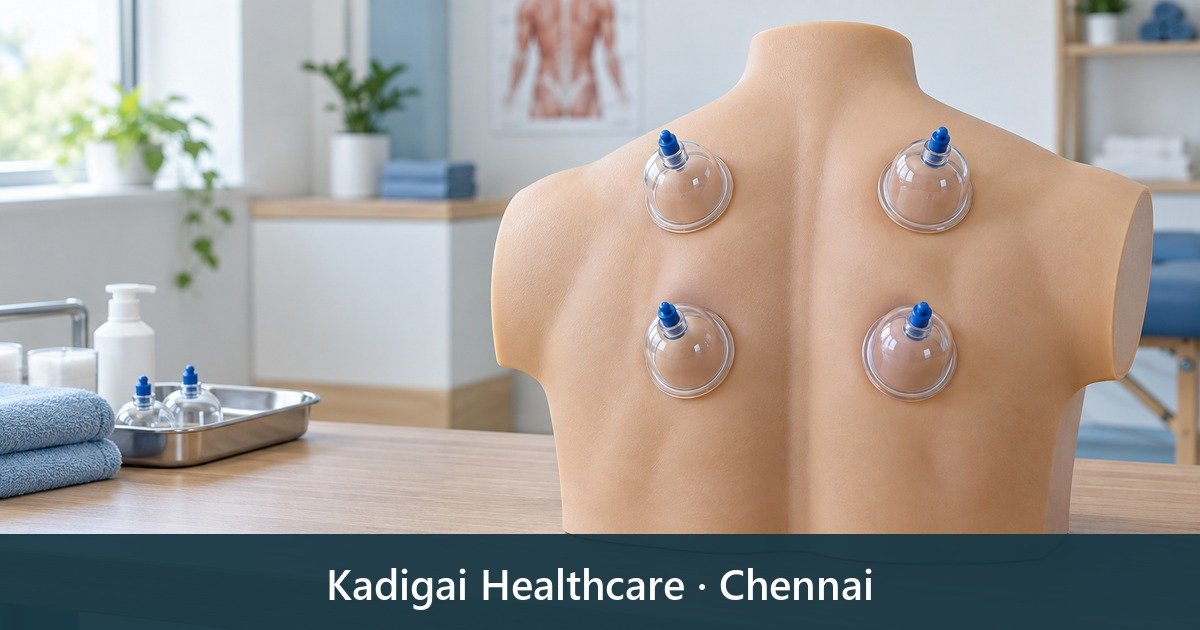
Cupping uses cups made of glass, silicone, plastic or bamboo to create gentle suction on the skin. The suction lifts the skin and the muscle layer beneath it for a few minutes at a time. It has a long history in Chinese medicine and in Unani and Middle Eastern traditions, where wet cupping is known as Hijama.
Today, cupping is most often used for muscle tightness and pain in the back, neck and shoulders. It is worth being clear about the evidence. The US National Center for Complementary and Integrative Health notes that research on cupping for pain is still limited and mostly of low quality. Some people find it eases tightness and helps them feel more comfortable. At Kadigai Healthcare, it is used as one part of a wider plan, not as a stand-alone cure.
Types of cupping offered at Kadigai Healthcare
Dr. K. Purushothaman offers dry cupping, wet cupping and Hijama, fire cupping and facial cupping. The right one depends on what your assessment shows, your skin, your general health and how you respond to treatment.
Dry cupping
Cups are placed on the skin and suction is created with a hand pump or by squeezing a soft silicone cup, without breaking the skin. It is the gentlest starting point for most people and is commonly used over the upper back, shoulders and lower back for muscle tightness.
Wet cupping and Hijama
Wet cupping adds a step. After a short period of suction, the cup is removed and a few small, shallow pricks are made in the skin. The cup is then placed again so that a small amount of blood collects in it. Hijama is the traditional name for wet cupping in Unani and Middle Eastern medicine, and it is the term many patients in Chennai search for. Because the skin is broken, hygiene and aftercare matter more than with dry cupping.
Fire cupping
In fire cupping, a flame briefly heats the air inside a glass cup. The flame is removed and the cup is placed on the skin straight away. As the air cools, it creates suction. The flame never touches the skin, but because heat is involved, it should only be done by a trained practitioner.
Facial cupping
Facial cupping uses small, soft cups with very light suction on the face. It is a much gentler technique than body cupping and does not use the stronger suction applied to the back. If you are interested in it, ask the doctor at your consultation whether it suits what you are looking for.
Cupping for back, neck and shoulder pain
Back, neck and shoulder pain is one of the most common reasons people look into cupping. Often, this kind of pain is linked to muscles that stay tight for hours. A long day at a laptop, a daily two-wheeler commute or an awkward night’s sleep are common examples.
Cupping on its own does not change the habits that keep pain coming back. That is why it starts with an assessment rather than going straight to the cups. Describing how he approaches every patient, Dr. Purushothaman says:
“For me, the complaint is just the starting point. The real work is understanding the person behind the symptom.”
Dr. K. Purushothaman
Depending on what the assessment shows, cupping may be combined with acupuncture, Varma Kalai or Siddha medicine, along with advice on posture, sitting and daily routine. If you want to understand how daily support affects your back, our guide to choosing the right ergonomic support for back pain is a useful companion read.
What happens during a cupping session?
Your first visit begins with a conversation and an examination. Dr. Purushothaman asks where the pain is, how long you have had it, what makes it better or worse, your general health and any medicines you take. This is also when he checks whether cupping is suitable for you at all.
If it is, you lie or sit comfortably and the cups are placed on the treatment area, usually the back, neck or shoulders. They typically stay in place for several minutes. Most people feel a firm pulling sensation rather than pain. With wet cupping and Hijama, the small pricks are made after the first round of suction.
Afterwards, you will usually see round red or purple marks where the cups sat. These are expected. They are not burns, and they generally fade within one to two weeks.
Is cupping safe?
Done by a trained practitioner with clean equipment, cupping is generally well tolerated. It still has side effects you should know about before you start:
- Round marks or bruising where the cups were placed, usually fading within one to two weeks.
- Mild soreness, tiredness or light-headedness after a session.
- Small scars at the prick sites after wet cupping or Hijama, in some people.
- Rarely, burns from fire cupping or skin infection after wet cupping.
Equipment that is not properly cleaned between patients can spread infection, which is why it is worth asking any clinic how it handles hygiene. For wet cupping and Hijama, it is reasonable to ask whether blades are single-use, and you are welcome to ask this at Kadigai Healthcare before your session.
If you see another doctor soon after cupping, mention it. The marks can look like bruising to someone who does not know the cause.
Who should not have cupping?
Cupping is not suitable for everyone. Please tell the doctor before treatment if any of these apply to you, because cupping may need to be avoided or adjusted:
- You are pregnant or think you might be.
- You have a bleeding or clotting disorder, or take blood-thinning medicine.
- You have anaemia, or you donated blood recently.
- You have a pacemaker, heart disease or epilepsy.
- You have eczema, psoriasis, an active skin flare, broken skin, a wound or a burn in the area to be treated.
- You have a fever or feel generally unwell on the day.
Aftercare: what to do after cupping
Most people go back to their normal day after a session. A few simple steps help the skin settle, especially after wet cupping or Hijama:
- Keep the treated area clean, dry and covered for the rest of the day.
- Drink water and avoid heavy exercise straight after the session.
- Expect some tenderness for a day or two. This is normal.
- Contact the clinic if you notice increasing redness, warmth, swelling, pus, a blister or severe pain.
Follow any specific aftercare advice the doctor gives you after your session.
When back pain needs a doctor’s assessment first
Cupping is meant for muscular pain and tightness. Some back pain needs a proper medical assessment before any cupping, Varma Kalai or acupuncture is considered:
- Pain that spreads down a leg with numbness, tingling or weakness.
- Back pain with fever, unexplained weight loss or feeling generally unwell.
- Pain after a fall, accident or injury.
- Pain that is severe, keeps getting worse or is worse at night.
Changes in bladder or bowel control, numbness around the genitals or buttocks, or weakness in both legs need emergency care the same day. Please do not wait for a routine appointment if you notice any of these.
Booking cupping therapy in Chennai
Kadigai Healthcare in Saligramam offers dry cupping, wet cupping and Hijama, fire cupping and facial cupping, led by Dr. K. Purushothaman. The clinic in Saligramam is easy to reach from Vadapalani, Virugambakkam, Valasaravakkam, Kodambakkam, Ashok Nagar and T. Nagar.
If you are comparing options for long-standing pain, our article on acupuncture vs physiotherapy for chronic pain may help. When you are ready, book a consultation to find out whether cupping or Hijama is right for you.
Why patients choose cupping at Kadigai Healthcare
Cupping therapy in Chennai is often offered as a quick, walk-in treatment. At Kadigai Healthcare, it is part of an individualised treatment plan. The type of cupping is chosen for each person rather than applied the same way to everyone.
Because Dr. Purushothaman also works with Siddha medicine, acupuncture and Varma Kalai, cupping is never the only tool on the table. When something else would serve you better, he will say so.
This article is for general information only and is not a substitute for a personal consultation. Please see a qualified doctor for diagnosis and treatment of your condition.
Sources
- National Center for Complementary and Integrative Health (NIH): Cupping
- Cleveland Clinic: Cupping therapy
- Henry Ford Health: Cupping
Frequently Asked Questions
Is cupping painful?
Most people describe a firm pulling or tight feeling rather than pain. Dry cupping is usually the most comfortable. Wet cupping and Hijama involve small pricks in the skin, which cause brief discomfort.
Tell the practitioner if the suction feels too strong. It can be adjusted during the session, and how it feels for you guides the choice of technique.
How long do cupping marks last?
The round red or purple marks usually fade within one to two weeks. Darker marks can take a little longer. They are a normal effect of the suction and are not burns.
If you have an event or a medical appointment coming up, mention it before your session so the treatment area can be planned around it.
What is the difference between dry cupping and Hijama?
Dry cupping uses suction only and does not break the skin. Hijama is a form of wet cupping in which a few small, shallow pricks are made so a little blood collects in the cup.
Because the skin is broken, Hijama needs stricter hygiene and aftercare. Your doctor will advise which suits you after an assessment.
Can cupping help with back pain?
Some people with muscular back pain find cupping eases tightness and helps them feel more comfortable, but research on cupping for pain is still limited.
At Kadigai Healthcare, it is used alongside acupuncture, Varma Kalai or Siddha medicine and advice on posture and routine, rather than as a treatment on its own.
How many cupping sessions will I need?
There is no fixed number that suits everyone. It depends on what is causing your pain, how long you have had it and how your body responds to the first sessions.
Dr. Purushothaman will suggest a plan after your assessment and review it as you go.
Where can I get Hijama in Chennai?
For Hijama and cupping therapy in Chennai, Kadigai Healthcare offers Hijama, wet cupping, dry cupping, fire cupping and facial cupping at its clinic in Saligramam.
Each patient is assessed by Dr. K. Purushothaman before treatment to check that cupping is suitable. The clinic is close to Vadapalani, Virugambakkam, Valasaravakkam and Kodambakkam.