Decoding the Myth, Empowering Humanity: The Miracles of the Siddhars
Was sacred ash really just ash? Or was there a deeper science hidden within it?
From childhood, I had heard stories about saints and Siddhars giving Vibuthi—sacred ash—to people suffering from various ailments, asking them to consume a small quantity every day. According to these stories, some people experienced remarkable recovery.
As a child, I accepted these stories with wonder.
But as I grew older, a different question began to emerge:
How can something that looks like ordinary ash have such profound effects on the human body?
Was it simply faith?
Was it a miracle?
Or was there a deeper medicinal knowledge behind what people called Vibuthi?
That question stayed with me for years.
My curiosity eventually led me towards the study of traditional medicine. As I learned Siddha medicine and integrative approaches to health, I began looking at these stories from another perspective—not merely as miracles, but as clues to an ancient system of knowledge.
And one of the most fascinating subjects I encountered was the alchemy of Siddha medicine.
Beyond Ordinary Ash
In Siddha medicine, there is an extensive tradition of preparing highly processed medicinal substances known as Parpam, Bhasma, Chunnam and related formulations.
These are not simply substances that have been burned and reduced to ash.
Traditional Siddha and Indian alchemical systems describe elaborate processes involving purification, grinding, levigation, calcination and repeated processing. The objective is to transform raw substances into medicinal preparations with specific properties.
This is where the story of Vibuthi becomes particularly interesting.
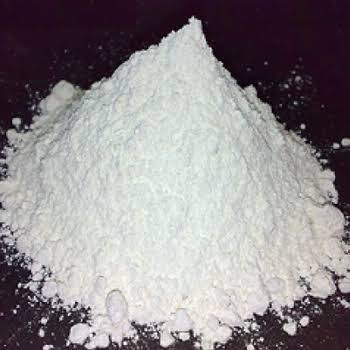
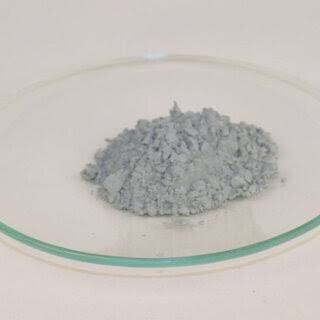
What appears externally to be a simple white or grey powder may, in certain traditional contexts, have a very different origin and purpose.
The appearance alone does not tell us what the substance actually contains.
This raises an important possibility:
Could some historical accounts of medicinal Vibuthi have involved specially prepared medicinal substances rather than ordinary ash?
From the perspective of Siddha medicine, this question deserves serious investigation.
The Siddhars: Physicians, Alchemists and Researchers
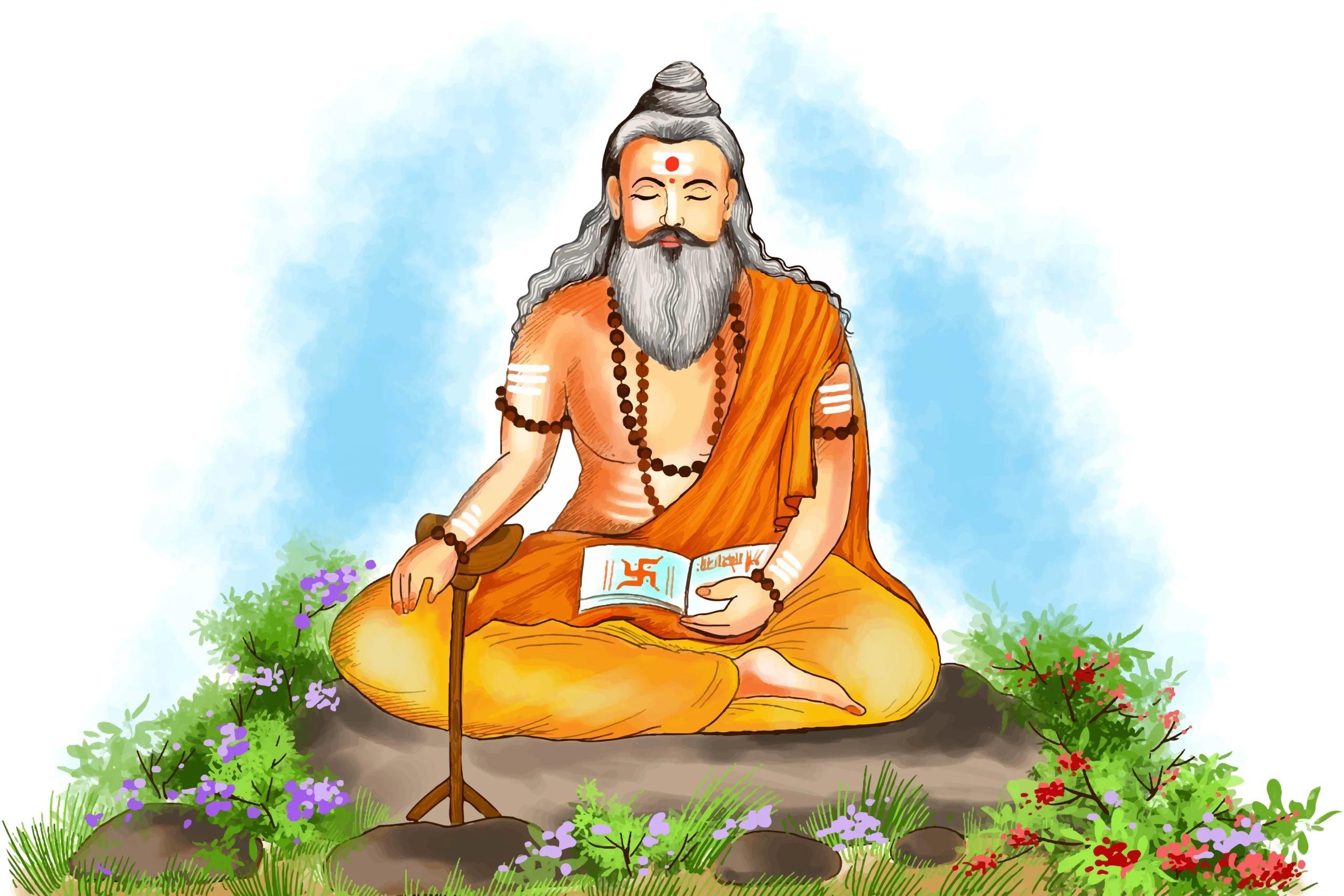
The Siddhars are often remembered primarily as spiritual masters.
But the Siddha tradition also presents them as observers of nature, physicians, pharmacologists and practitioners of Rasavatham—the traditional science of alchemy.
Their knowledge extended into herbs, minerals, metals, diet, lifestyle, rejuvenation practices, anatomy, physiology and methods of preparing medicines.
This is why the stories surrounding Siddhars cannot always be understood through a purely spiritual lens.
Some of what was described as a miracle may have involved knowledge of medicinal substances that was not easily understood by the general population.
A person may have seen a Siddhar give a small quantity of a white powder and simply called it Vibuthi.
But the Siddhar may have known exactly what that preparation was, how it was produced, how much should be administered, and for what purpose.
The external appearance was simple.
The underlying preparation could be extraordinarily sophisticated.
The Question That Changed My Journey
But another question immediately arose.
Siddha literature contains an enormous body of medicinal formulations. Different preparations are traditionally associated with different conditions, constitutions and therapeutic purposes.
So how could the ancient masters possibly approach such a wide variety of human illnesses?
Was there a deeper principle behind their approach?
This question eventually introduced me to two remarkable concepts within the higher alchemical traditions of Siddha medicine:
1. Guru Marunthu

2. Muppu
These concepts are traditionally described in some Siddha lineages as highly important substances within the alchemical and medicinal tradition.
They are often discussed in connection with the transformation, potentiation or enhancement of medicines and with the deeper principles of Siddha pharmacology and Kaya Kalpam traditions.
Guru Marunthu: The “Master Medicine”
The term Guru Marunthu is associated in Siddha traditions with the idea of a powerful or foundational medicinal principle.
The word Guru carries the sense of something that guides, enhances or elevates.
Within certain traditional interpretations, Guru Marunthu is described as having an important role in the preparation or potentiation of medicines.
Rather than thinking of it simply as “one medicine that cures everything,” it may be more useful to understand the concept as representing a master principle within Siddha alchemical medicine.
This distinction is important.
Ancient medical traditions often encoded complex knowledge through symbolic language. Terms such as Guru, Muppu, Rasavatham and Kaya Kalpam cannot always be translated adequately into modern pharmaceutical terminology.
They need to be studied within the context of the Siddha system itself.
Muppu: One of Siddha Alchemy’s Greatest Mysteries
Perhaps no concept is more fascinating—or more debated—than Muppu.
Muppu is traditionally described in Siddha literature as a special alchemical preparation or principle associated with the transformation and enhancement of medicinal substances.
The word itself is commonly understood as referring to a combination of three components or principles.
Different Siddha traditions and texts describe its preparation and properties in different ways. This diversity itself is a reminder that Muppu is not something that can be reduced to a simple internet recipe or a single modern definition.
In traditional Siddha thought, Muppu has been associated with the higher objectives of medicine, including the Kaya Kalpam tradition of rejuvenation and preservation of health.
Some traditional interpretations go even further, connecting it with longevity and spiritual transformation.
But here we must make an important distinction.
Traditional claims are not automatically scientific facts.
Claims of universal disease eradication, immortality or extraordinary rejuvenation require rigorous scientific investigation before they can be presented as established medical facts.
That does not make the traditional knowledge unimportant.
It makes the questions worth investigating.
Was Vibuthi a Medicine Disguised as a Miracle?
This brings us back to the original mystery.
Perhaps the most fascinating possibility is that some historical healers used medicinal preparations whose physical appearance resembled ordinary sacred ash.
To the observer, it was Vibuthi.
To the practitioner, it may have represented a carefully prepared medicinal substance.
And because the knowledge required to prepare and administer such substances was traditionally preserved within specialist lineages, the underlying process may not have been obvious to everyone.
Over generations, the distinction between medicine, ritual and spirituality could easily become blurred.
The patient experienced something remarkable.
The community remembered it as a miracle.
The Siddhar may simply have understood it as the application of a sophisticated medicinal principle.
This is, of course, a hypothesis that requires historical and scientific investigation—not something that should be accepted blindly.
The Science We Still Need to Decode
Today, modern science gives us powerful tools that ancient physicians did not possess.
We can study:
Chemical composition
Mineral structure
Particle size
Bioavailability
Toxicity
Pharmacokinetics
Pharmacodynamics
Nanostructural properties
Interactions with biological systems
Standardisation and reproducibility
These tools allow us to ask a completely new set of questions.
What exactly is present in a traditional Parpam or Chunnam?
How does the traditional preparation process alter the material?
Does the final preparation have measurable biological activity?
What compounds or mineral phases are formed during processing?
What determines safety and dosage?
Can traditional formulations be standardised and studied scientifically?
These are the questions that can transform an ancient mystery into modern knowledge.
Tradition Should Not Fear Science
For me, studying Siddha medicine has not been about proving that every traditional claim is a miracle.
It has been about asking better questions.
Traditional knowledge should not be placed above scientific investigation.
At the same time, scientific investigation should not dismiss traditional knowledge simply because it comes from an ancient system.
The better approach is dialogue.
Let tradition provide the questions.
Let science provide the tools to investigate them.
And let evidence determine what survives.
From Childhood Curiosity to a Lifelong Journey
What began for me as a childhood fascination with stories of saints and sacred ash gradually became something much deeper.
I started with a simple question:
“How can ash heal someone?”
That question eventually led me towards Siddha medicine, traditional pharmacology and the fascinating world of Siddha alchemy.
I discovered that behind some of the simplest-looking traditional practices lies an enormous body of knowledge that deserves careful study.
Whether every story attributed to Siddhars represents a supernatural miracle is a question I cannot answer.
But I have learned something more valuable:
Sometimes, what we call a miracle may simply be knowledge that we have not yet decoded.
And sometimes, the greatest responsibility of our generation is not to blindly believe the past—or blindly reject it.
It is to investigate it.
To preserve what is valuable.
To challenge what is unproven.
To scientifically examine what can be tested.
And to transform ancient knowledge into responsible knowledge for humanity.
That is the journey I have chosen.
From myth to inquiry.
From tradition to evidence.
From mystery to understanding.
The Siddhars left questions for us.
Perhaps our responsibility is to find the science behind them.
A Note on Tradition and Evidence
The concepts of Muppu, Guru Marunthu, Parpam, Chunnam and Siddha alchemy belong to traditional medical and alchemical knowledge systems. Their historical descriptions, preparation methods and therapeutic claims vary across texts and lineages. Traditional claims should not be interpreted as established medical facts without appropriate scientific, toxicological and clinical evidence.
This article explores the subject from a historical and intellectual perspective and is not a recommendation to consume Vibuthi, Parpam, Chunnam, Muppu or any mineral/metal-based preparation without qualified professional supervision.