
If You’re Researching Ergonomic Support for Back Pain
If you’re researching ergonomic support for back pain, you’ve probably already noticed how much the surfaces supporting your back — your mattress, chair, and pillow — influence how much strain your spine carries each day. Many people searching for back pain relief start here: a heating pad, a firmer mattress, a better office chair, a lumbar support belt. It’s a natural instinct — the pain is real, and a product feels like a fast, concrete fix.
For a lot of everyday stiffness, these changes genuinely help. The frustration comes later, when the same ache returns a few weeks after the new chair arrives, or the support belt stops making a difference the moment it comes off. That pattern — temporary relief followed by a return of the same pain — is common, and it usually means the product addressed the symptom without touching whatever is actually causing it.
What does the right ergonomic support actually do?
The right ergonomic support for back pain works by keeping your spine closer to its natural alignment for longer stretches of time, reducing the cumulative strain of gravity and poor posture. It does not correct an existing muscular imbalance, a postural habit built up over years, or an underlying joint or nerve issue — it simply reduces one contributing factor while you address the others.
Four categories come up most often in patient questions.
Mattresses. A mattress that’s too soft lets the hips and shoulders sink out of alignment overnight; one that’s too firm can create pressure points at the shoulders and hips instead. Medium-firm support is a reasonable general starting point for most people with ordinary mechanical back pain, though the right choice also depends on body weight and preferred sleep position.
Pillows. Orthopedic and cervical pillows aim to keep the neck in a neutral position, which indirectly affects the upper back and shoulders. For someone whose pain is centred lower down, a pillow change alone won’t move the needle much.
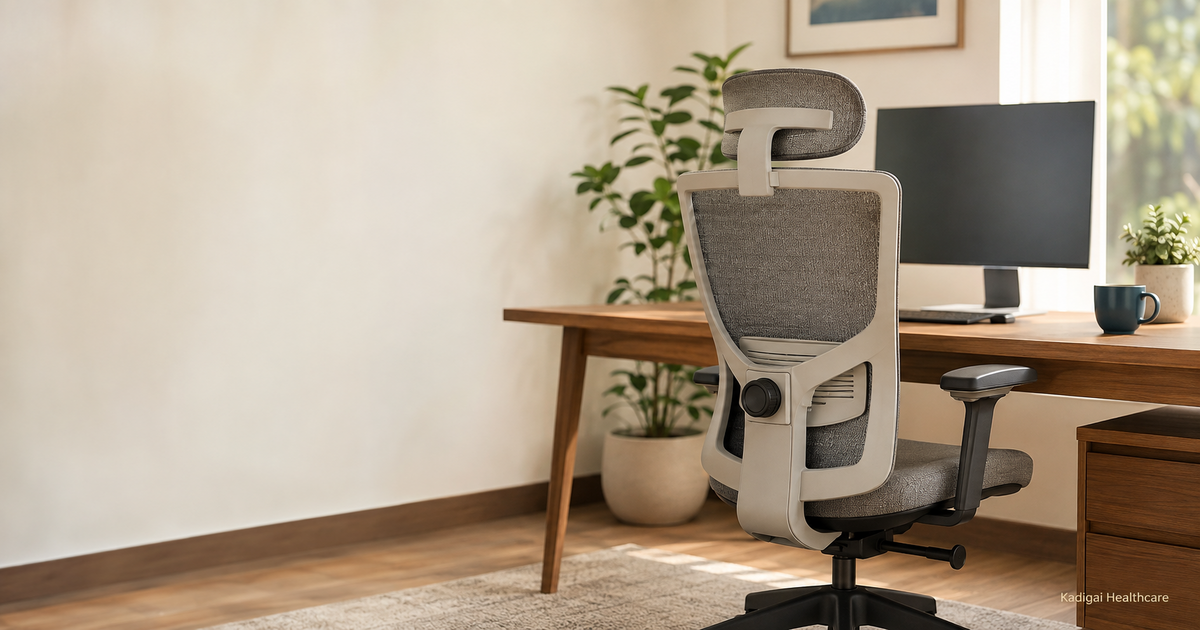
Chairs and desks. An ergonomic chair with adjustable lumbar support reduces the slouching that builds up over a workday, particularly for anyone sitting more than five or six hours daily. Desk and monitor height matter just as much as the chair itself — a chair alone rarely solves a workstation problem.
Belts and braces. A back support belt provides external compression and a posture reminder during activity. It’s generally intended for short-term use during specific tasks (heavy lifting, a long drive) rather than as an all-day solution, since over-reliance can allow supporting muscles to weaken further over time.
At a glance:
| Product | Helps With | Doesn’t Fix |
|---|---|---|
| Mattress | Spinal alignment overnight | An underlying muscular or nerve-related cause |
| Pillow | Neck position | Lower back pain |
| Chair | Workday posture | Weak supporting muscles |
| Belt | Short-term compression during specific tasks | Long-term spinal stability |
Why timing and duration matter as much as the product itself. The same mattress or chair that feels fine for the first hour can create a very different amount of strain over eight hours. Cumulative load — how long you spend in one position, day after day — usually matters more than any single feature of a product. This is why two people can buy an identical chair and have very different experiences: one changes position regularly through the day, the other doesn’t.
Are ergonomic aids a treatment, or just support?
They’re support, not treatment. Ergonomic support for back pain reduces daily mechanical strain, which can meaningfully improve comfort and slow the progression of certain postural problems. What it doesn’t do is diagnose or resolve why the pain started — that requires understanding the specific pattern of a person’s pain, their posture, their activity levels, and in some cases, an underlying structural or nerve-related cause.
At Kadigai Healthcare, Dr. K. Purushothaman’s evaluation looks at ergonomic factors as one part of a broader picture that includes physical health, lifestyle, nutrition, and the specific character of the pain — sharp or dull, constant or activity-related, localized or spreading. Depending on what that evaluation shows, a treatment plan might combine posture and lifestyle adjustments with Siddha-Varma or acupuncture-based approaches aimed at the underlying cause, rather than the support surface alone.
This matters most for anyone whose pain keeps returning despite trying several different products. Repeated product-switching without an underlying evaluation often means months of trial and error without addressing the root issue.
For someone whose pain has been present for months rather than weeks, the more useful question usually isn’t “which product should I try next” but “why does the pain keep coming back regardless of the product.” That question is what a proper clinical evaluation is designed to answer.
Common Misconceptions
“If I buy the most expensive mattress or chair, my back pain will go away.” Price doesn’t determine fit. A very firm, premium mattress can be just as poorly suited to someone’s body as a cheap, sagging one — the right support depends on individual factors, not the price tag.
“A back support belt strengthens the back.” It does the opposite over time if worn constantly. A belt supports passively; it doesn’t build the muscular strength that actually stabilises the spine long-term.
“Standing desks solve the problem sitting caused.” Standing all day introduces its own strain patterns. The healthiest approach usually involves alternating positions throughout the day, not replacing one static posture with another.
How can I prevent back pain from coming back?
Ergonomic products work best alongside habits that reduce strain in the first place: changing position every 30–45 minutes rather than remaining static for hours, maintaining core and back muscle strength through regular movement, and paying attention to how you lift, carry, and bend during ordinary daily tasks — not only during exercise. A well-chosen mattress or chair supports these habits; it doesn’t replace them.
Getting ready for your consultation
If you’re planning to discuss ergonomic changes or ongoing back pain with a doctor, it helps to note down: when the pain started and whether anything specific triggered it, whether it’s constant or activity-related, whether it’s confined to your back or spreads elsewhere, and what you’ve already tried (which mattress, chair, or products, and for how long). This gives the doctor a clearer starting picture than describing the pain alone.
When should ergonomic changes not be your first step?
If back pain is joined by numbness, tingling, or weakness in a leg, if it follows a fall or injury, or if it’s accompanied by fever, unexplained weight loss, or bladder or bowel changes, an ergonomic adjustment is not an adequate first response — these patterns need a proper evaluation promptly, not a new mattress. Pain that has lasted more than a couple of weeks despite better support, or that disrupts sleep most nights, is also worth having assessed rather than continuing to manage with products alone.
Frequently Asked Questions — In Dr. Purushothaman’s Own Words
Which mattress is best for back pain?
“There’s no single mattress that suits everyone, in my experience — the right firmness depends on body weight, sleep position, and where the pain sits. I generally suggest a medium-firm mattress as a starting point for ordinary mechanical back pain, but if the pain persists, I’d want to examine it individually rather than have you try another product.”
Do back support belts actually help?
“I tell patients a support belt is useful for short periods during specific activities — heavy lifting, a long drive — since it reduces strain and works as a posture reminder. But worn all day, every day, it lets the muscles that would normally stabilise your back weaken further. I recommend it as a short-term aid, not a daily habit.”
Can an ergonomic chair alone fix back pain from desk work?
“An ergonomic chair helps, but I rarely see it solve the problem on its own. Desk height, monitor position, how often you get up and move, and your own posture habits all play a role — the chair is only one part of the picture.”
How do I know if my pillow is contributing to my back pain?
“If your pain is concentrated in the neck or upper back and feels worse in the morning, I’d look closely at your pillow height and firmness — it should keep your neck roughly level with your spine. If the pain sits mainly in your lower back, though, the pillow is unlikely to be the main factor.”
When Ergonomic Support for Back Pain Isn’t Enough
If ergonomic support for back pain hasn’t solved the underlying issue — you’ve tried mattress changes, a new chair, or a support belt and the pain keeps returning — it’s a reasonable signal that the underlying cause hasn’t been addressed yet. Dr. K. Purushothaman at Kadigai Healthcare in Saligramam, Chennai, evaluates posture and lifestyle factors alongside the specific pattern of your pain, as part of a Siddha-Varma and acupuncture-based approach to chronic back pain. Book a consultation to look at what’s actually behind it.
Why an ergonomic-first approach isn’t enough on its own
At Kadigai Healthcare, ergonomic guidance is treated as a starting point for day-to-day comfort — never the endpoint of care. With over 15 years of experience, Dr. K. Purushothaman’s approach combines Siddha medicine with the neurophysiological principles of acupuncture, evaluating each patient’s physical health, lifestyle, nutrition, and specific pain pattern together, rather than treating back pain as a single generic condition with a single generic fix.
[…] and daily routine. If you want to understand how daily support affects your back, our guide to choosing the right ergonomic support for back pain is a useful companion […]