
Understanding the Difference
Anyone comparing cervical spondylosis vs spondylitis online has likely run into both terms used as if they mean the same thing — and sometimes they’re used to mean genuinely different things. and sometimes one is simply used incorrectly in place of the other. That inconsistency is itself part of the problem: before asking “what’s the difference,” it’s worth knowing that the second term isn’t always used precisely in the first place.
If you’ve been told you have cervical spondylosis and then come across information about spondylitis — or the reverse — it’s worth pausing before assuming either word carries one fixed meaning. This article walks through what cervical spondylosis actually refers to, why “cervical spondylitis” is a less precise term, and why confirming the exact diagnosis with a doctor matters more than the wording alone.
In short: cervical spondylosis is the recognised term for age-related degenerative change in the neck. “Cervical spondylitis” is less precise and may be used inconsistently — it may refer to inflammation in the cervical spine, but some people also use it incorrectly when they mean cervical spondylosis. A doctor should confirm the exact diagnosis before any treatment decisions are made.
What Is the Difference Between Cervical Spondylosis and Cervical Spondylitis?
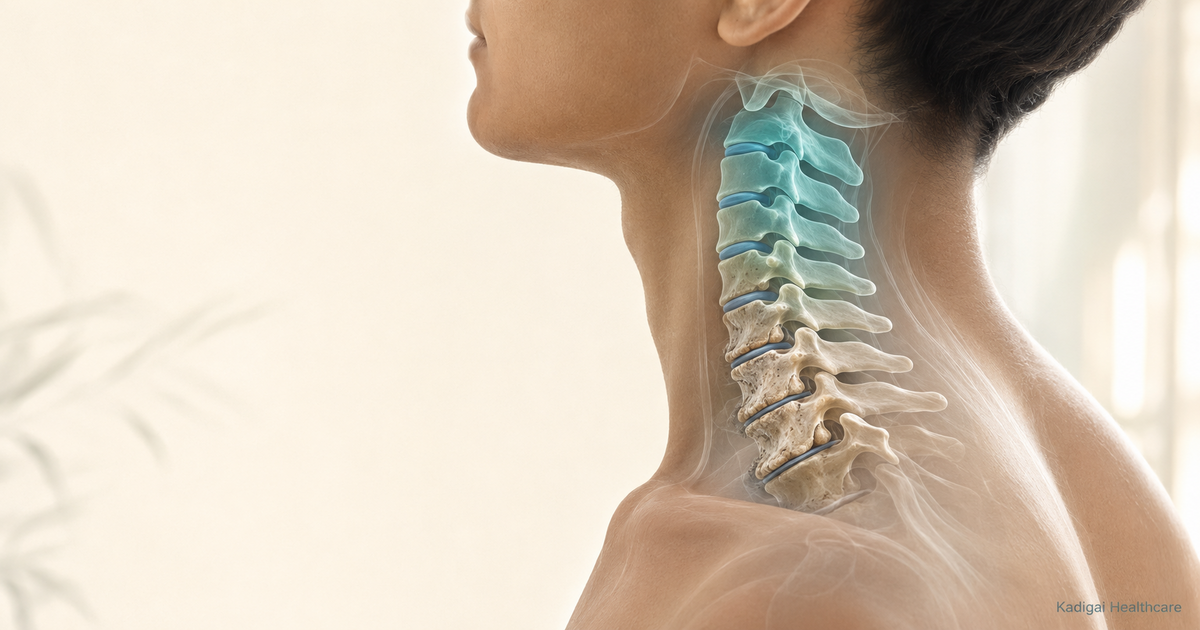
Cervical spondylosis has a well-established, recognised meaning: age-related degenerative change in the discs, joints, and bones of the neck, similar in nature to osteoarthritis. “Cervical spondylitis,” by contrast, is a much less precise term. It’s sometimes intended to describe inflammation in the cervical spine, but it’s also sometimes used — inconsistently, and at times incorrectly — as a stand-in for cervical spondylosis itself. Because the term isn’t used consistently across patients, clinicians, or websites, the safest approach is to confirm the exact diagnosis with a doctor rather than relying on the wording alone.
When a clinician is specifically referring to inflammatory spinal disease rather than age-related wear, they may use more precise terms such as axial spondyloarthritis or ankylosing spondylitis — conditions that are distinct from cervical spondylosis and generally involve a different pattern (younger age of onset, morning stiffness, possible involvement of other joints). This article doesn’t need to cover that taxonomy in depth, but it’s worth knowing that “cervical spondylitis” alone, without further context, may not identify a precise diagnosis — what matters is what your medical record or treating doctor specifically intended by the term.
How Do Inflammatory and Mechanical Neck-Pain Patterns Tend to Differ?
Inflammatory spinal pain — the kind associated with conditions like ankylosing spondylitis or axial spondyloarthritis — may be associated with prolonged morning stiffness, symptoms after rest, and some improvement with movement. Mechanical or degenerative neck pain, the kind typically seen with cervical spondylosis, may be more closely linked to posture, loading, or particular movements. These patterns can overlap, though, and neither is sufficient on its own to diagnose either condition without a proper clinical assessment.
What Do “Without Myelopathy,” “With Radiculopathy,” and “With Myelopathy” Mean?
These terms describe whether the degenerative changes of cervical spondylosis are associated with nerve-root or spinal-cord involvement — they are clinical descriptors of neurological involvement, not necessarily fixed stages that every patient passes through in sequence. “Without myelopathy” means the degenerative changes are present but there’s no evidence the spinal cord itself is affected. “With radiculopathy” means a nerve root exiting the spine is being irritated or compressed, which can cause pain, tingling, or weakness radiating into the shoulder or arm. “With myelopathy” means the spinal cord itself is affected, which can influence not just the arms but also gait, balance, and fine motor control in the hands.
Myelopathy generally requires more urgent assessment, because spinal-cord function may be affected. Radiculopathy also warrants evaluation, particularly when weakness, progressive sensory change, or persistent arm pain is present. How significant uncomplicated spondylosis is for a given person depends on their actual symptoms and examination findings, not on the label alone — some radiological spondylosis is entirely asymptomatic, while significant pain or disability can occur without either radiculopathy or myelopathy being present.
Can Cervical Spondylosis Cause Frozen Shoulder?
Cervical spondylosis and frozen shoulder are separate conditions, although they can occur together and may produce overlapping pain or restricted movement. Neck discomfort can also alter how a person uses the shoulder day to day. Rather than one reliably causing the other, a clinical examination is what actually determines whether symptoms are arising from the neck, the shoulder, or both.
How Does This Relate to Cervical Myelopathy or General Osteoarthritis?
Cervical myelopathy, as noted above, is a specific and more advanced complication that can arise from cervical spondylosis when spinal cord compression is present — it’s a subset, not a separate disease. Osteoarthritis is the broader category of joint wear that cervical spondylosis represents in the neck specifically; the same degenerative process affecting the neck is usually just called cervical spondylosis rather than “neck osteoarthritis,” even though the underlying process is the same.
Treatment Approach
Why Does Knowing Which Condition You Have Change Anything?
Because different underlying causes call for different next steps. Management of uncomplicated cervical spondylosis depends on the specific symptoms and examination findings — it may include education about the condition, activity modification, guided exercise or physiotherapy, pain-relief measures appropriate to the individual, and review if symptoms persist or worsen. Imaging or specialist assessment may be considered when the history or examination suggests nerve-root or spinal-cord involvement. Inflammatory conditions such as ankylosing spondylitis or axial spondyloarthritis need to be identified and managed by the right specialist, since they can involve joints and systems beyond the neck and typically call for a different category of medical management altogether.
This is also why an article like this one can only take you so far. General information about these terms is useful for understanding what a doctor might mean when they use one or the other, but it isn’t a substitute for a proper evaluation of your own neck pain — one that looks at your specific history, movement pattern, and any additional symptoms, alongside imaging where appropriate.
At Kadigai Healthcare, this supportive care is provided through Siddha medicine and acupuncture. Dr. K. Purushothaman’s evaluation combines these approaches with attention to posture, lifestyle, and the specific pattern of symptoms — offered once uncomplicated, mechanical neck pain has been distinguished from a presentation that needs urgent specialist referral, and never in place of that assessment.
At Kadigai Healthcare, evaluation for chronic or recurring neck pain considers the pattern and history of symptoms as part of a broader picture — alongside physical health, lifestyle, and daily habits. Any supportive care offered follows an appropriate medical assessment, particularly when symptoms suggest nerve-root or spinal-cord involvement.
“For general background on this condition, see the American Academy of Orthopaedic Surgeons’ patient guide to cervical spondylosis.”
Common Misconceptions
Spondylosis and spondylitis are just two spellings of the same thing.
They aren’t guaranteed to mean the same thing — but the honest answer is more nuanced than “one is wear, one is inflammation.” “Cervical spondylitis” itself isn’t a precise, universally standardised diagnostic term: it’s sometimes used to describe inflammation, and sometimes used loosely, and inaccurately, as another way of saying cervical spondylosis. The safest approach is to ask a doctor what they specifically mean by the term, rather than assuming either definition applies.
Any word ending in ‘-itis’ means there’s an infection.
Not in this context. The “-itis” suffix medically means inflammation, which can have many causes — autoimmune processes among them — and infection is only one specific type of inflammation, not a synonym for it.
If I don’t have myelopathy or radiculopathy, my cervical spondylosis isn’t serious.
Uncomplicated cervical spondylosis is common and often manageable, but not showing a presentation involving the spinal cord doesn’t mean “ignore it.” Ongoing neck pain or stiffness is still worth having properly assessed, particularly if it’s persistent or getting worse, since how significant it is depends on your actual symptoms and examination findings, not the label alone.
Prevention
Because age-related cervical spondylosis is largely a function of age-related wear, it can’t be fully prevented — but its day-to-day impact can often be managed. Posture during desk work and phone use, regular gentle neck and shoulder movement rather than long static positions, and attention to how pillows and sleep position affect neck alignment are the everyday factors most commonly discussed in this context. None of these change the underlying degenerative process, but they can influence how much additional strain accumulates on top of it
Consultation Preparation
Before discussing neck pain or a possible cervical spondylosis or spondylitis diagnosis with a doctor, it helps to note: how long the stiffness or pain has been present, whether it’s worse in the morning or with activity, whether it spreads into the shoulder, arm, or hand, and whether you’ve noticed any change in grip strength, coordination, or the way you walk. Mentioning any other joints affected, or a family history of inflammatory joint conditions, can also help point toward whether an inflammatory process should be considered alongside ordinary wear-and-tear causes.
Safety & When to Seek Care
When Does Neck Pain Need Urgent Medical Attention Rather Than General Information?
Seek urgent medical assessment if neck pain is accompanied by new weakness in an arm or leg, difficulty walking, loss of coordination, progressive numbness, or a new change in bladder or bowel control. These symptoms may indicate spinal-cord or significant nerve involvement and should not be managed only with home care or general self-care measures.
Sudden, severe neck pain — especially following an injury — or neck pain accompanied by fever or unexplained weight loss similarly warrants prompt medical assessment rather than watching and waiting.
Frequently Asked Questions
Is cervical spondylitis a recognised diagnosis?
Not in the same clear-cut way that cervical spondylosis is. “Cervical spondylitis” is used inconsistently — sometimes to describe inflammation of the cervical spine, and sometimes, inaccurately, as another way of referring to cervical spondylosis. If you’ve seen the term used about your own neck pain, it’s worth asking the doctor or report what specifically was meant, rather than assuming a fixed definition.
Can an X-ray distinguish spondylosis from an inflammatory disease?
An X-ray can show the degenerative changes typical of cervical spondylosis, and in some cases can raise suspicion of an inflammatory process, but distinguishing the two reliably generally needs a fuller clinical picture — symptoms, examination findings, and sometimes additional tests — rather than imaging alone.
Can cervical spondylosis cause arm weakness?
It can, if the degenerative changes are compressing a nerve root (radiculopathy) or the spinal cord itself (myelopathy). Arm weakness alongside neck pain is not something to self-manage — it’s a pattern that needs prompt medical evaluation.
Which doctor should assess suspected cervical myelopathy?
Suspected myelopathy — particularly with gait, balance, or hand-coordination changes — generally needs assessment by a specialist experienced in spinal or neurological conditions, such as a neurologist or orthopaedic/spine specialist, promptly rather than on a routine timeline.
Can cervical spondylosis exist without symptoms?
Yes — degenerative changes in the cervical spine become increasingly common with age and can appear on imaging even in people who have no neck symptoms at all. Finding spondylosis on a scan doesn’t automatically mean it’s the cause of any pain a person may separately be experiencing.
What is cervical spondylosis without myelopathy?
It means the usual age-related degenerative changes are present in the neck, but there’s no evidence the spinal cord itself is affected. This is the most common presentation. Management depends on the individual’s symptoms and examination findings, and may include education, activity modification, guided exercise or physiotherapy, and pain-relief measures — not a single fixed routine for everyone.
What is cervical spondylosis with radiculopathy?
It means a nerve root exiting the spine is being irritated or compressed by the degenerative changes, which can cause pain, tingling, or weakness that radiates into the shoulder or arm rather than staying confined to the neck. This pattern warrants a proper evaluation, particularly if weakness or progressive sensory change is present.
What is cervical spondylosis with myelopathy?
It means the spinal cord itself is affected by the degenerative changes, not just a nerve root. Because the spinal cord carries signals to the whole body below the neck, this can affect gait, balance, and hand coordination, not only arm pain — and generally needs more urgent assessment than uncomplicated spondylosis or radiculopathy alone.
Get Clarity on Your Neck Pain
If you’ve been told you have cervical spondylosis, cervical spondylitis, or you’re simply trying to work out whether ongoing neck pain fits either pattern, Kadigai Healthcare in Saligramam, Chennai, can help you get that clarity. Understanding cervical spondylosis vs cervical spondylitis starts with confirming what the diagnosis actually means in your individual case — not with the wording alone. Book a consultation to discuss your specific pattern of neck pain.
Why the Specific Pattern Matters More Than the Label Alone
Rather than treating “neck pain” as one uniform complaint, the evaluation approach at Kadigai Healthcare looks at the specific pattern of a patient’s symptoms — where they show up, what makes them better or worse, and whether there are any signs pointing toward nerve or spinal cord involvement — before considering what kind of ongoing support might be appropriate. For Kadigai Healthcare, that support is Siddha medicine and acupuncture, applied by Dr. K. Purushothaman alongside — never instead of — an appropriate medical assessment, particularly where nerve-root or spinal-cord involvement is suspected.
Medically reviewed by: Dr. K. Purushothaman, Siddha & Acupuncture Practitioner