

Patient Problem
Facial pressure behind the eyes, a heavy, blocked-up feeling across the cheeks and forehead, thick nasal discharge, and a nagging low-grade headache — these are the kinds of everyday symptoms that send people searching for “sinusitis symptoms” in the first place. Often the underlying question isn’t really “what is sinusitis” so much as “is this just a cold, or is it something that needs a doctor?”
That’s a reasonable question, because sinusitis symptoms genuinely do overlap with an ordinary cold in the early days, and most cases of sinus inflammation are mild and short-lived. But not every case is the same, and knowing what to look for — both the everyday symptoms and the small number of warning signs that matter more — helps you judge how to respond, rather than guessing.
In short: sinusitis commonly causes facial pressure, nasal blockage, thick discharge, reduced sense of smell, and headache. Most mild cases improve within a few weeks. Eye swelling, vision changes, severe facial swelling, confusion, or an unusually severe headache need urgent medical attention.
Doctor’s Explanation
What are the typical symptoms of sinusitis?
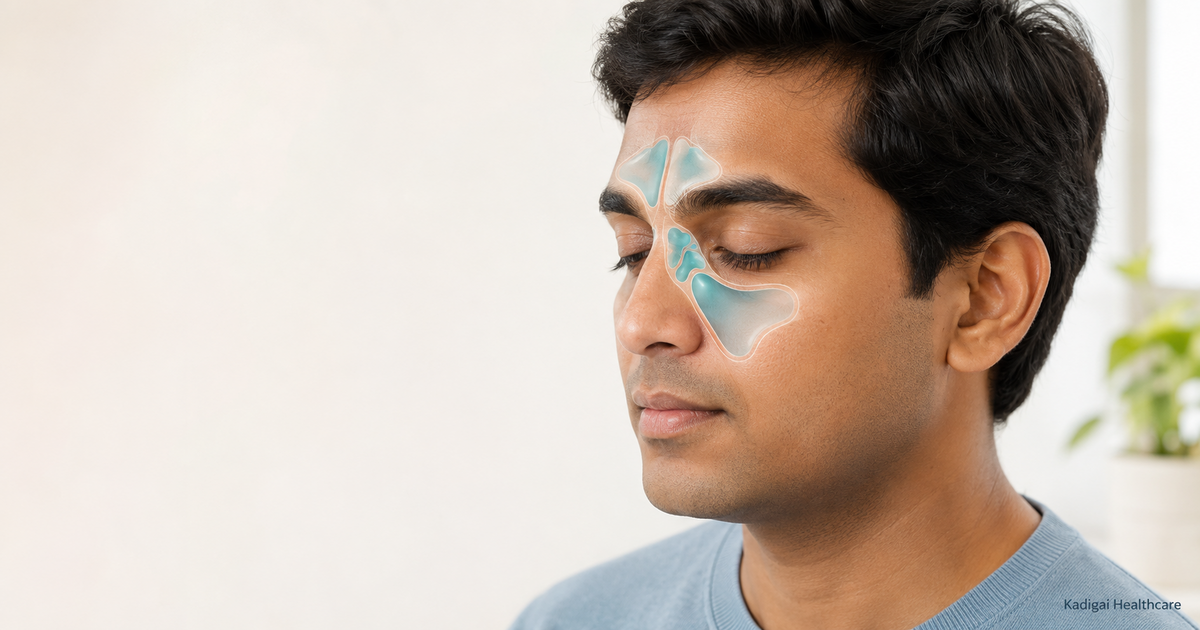
Sinusitis — inflammation of the sinuses, the air-filled spaces around the nose and eyes — typically presents with facial pain or pressure (often over the cheeks, forehead, or around the eyes), nasal congestion or blockage, thick or discoloured nasal discharge, a reduced sense of smell, and a cough that’s often worse at night due to drainage at the back of the throat. Fatigue and a mild, dull headache frequently accompany these core symptoms, and mild fever can occur, particularly in the earlier, more acute stages.
Why does sinusitis sometimes cause tooth or jaw pain?
The upper back teeth sit very close to the floor of the maxillary sinuses — the largest sinuses, located in the cheekbones. When these sinuses become inflamed or filled with pressure, that sensation can be felt as an ache in the upper teeth or jaw, sometimes convincingly enough that people first assume it’s a dental problem. This is a recognised pattern with sinus inflammation, not something unusual, though persistent tooth pain is still worth having a dentist rule out a genuine dental cause alongside considering sinusitis.
Why can sinusitis cause a bad smell or taste?
An unpleasant smell or taste can occur when thick mucus and post-nasal drainage remain in the nasal passages. Because changes in smell can have several causes — including nasal, dental, and other conditions, not sinusitis alone — persistent or unusual changes in smell are worth discussing with a doctor rather than attributing to sinusitis by default.
How can I tell if my symptoms are acute or chronic?
Acute sinusitis often begins after a cold and usually improves within a few weeks as the body clears the inflammation on its own. Symptoms lasting twelve weeks or longer are generally classified as chronic sinusitis and warrant further assessment, since chronic patterns often point toward an underlying factor — such as ongoing allergies, a structural issue in the nose, or repeated infections — rather than a single passing episode.
Treatment Approach
Does every case of sinusitis need antibiotics?
No — and this is one of the more common misunderstandings about sinusitis. Many cases of acute sinusitis develop after a viral respiratory infection and improve without antibiotics. Antibiotics are considered only when the pattern, duration, and severity of symptoms suggest a bacterial cause, and that judgement needs an in-person assessment by a doctor. Neither assuming antibiotics are always necessary nor assuming they’re never needed is accurate — it depends on the individual case.
What role do steam, saline rinses, and hydration play?
A saline nasal rinse, adequate fluids, and warm — not scalding — moist air may provide temporary relief from congestion and general discomfort. Avoid inhaling steam directly from boiling water, as this can cause burns; warm, comfortable steam from a safe distance is a reasonable alternative. These measures offer comfort and can make day-to-day symptoms more manageable, but they don’t treat an underlying infection or resolve chronic sinus disease on their own — they shouldn’t be relied on as the sole approach if symptoms are severe, persistent, or getting worse rather than better.
What else does an evaluation consider beyond the immediate symptoms?
When sinus symptoms recur, an assessment may also look at relevant contributing factors — such as allergies, exposure to smoke or other irritants, sleep quality, hydration, and other existing health conditions. These factors are considered alongside standard medical assessment, not as a substitute for diagnosis or treatment, and any specific approach would need to be confirmed as part of an in-person evaluation rather than assumed from an article. At Kadigai Healthcare, this whole-person evaluation is where Siddha medicine and acupuncture are applied — supporting recovery and addressing recurring triggers once any acute infection or red-flag symptoms have been medically assessed, and never as a substitute for antibiotics when a doctor determines they’re needed.
Common Misconceptions
“Thick or discoloured mucus always means a bacterial infection that needs antibiotics.”
Not necessarily — mucus colour and thickness can change during an ordinary viral cold too, and on its own isn’t a reliable sign that antibiotics are required. A doctor’s assessment, not the colour of the discharge alone, determines that.
“Sinusitis is just a bad cold, nothing more.”
For many people, yes, the two overlap closely and resolve the same way. But sinusitis that keeps recurring, lasts well beyond a typical cold, or comes with the warning signs below is a different situation and deserves a closer look.
“If decongestants clear the blocked feeling, the sinusitis is fully resolved.”
Symptom relief isn’t the same as the underlying inflammation resolving. Symptoms can return once a decongestant wears off if the underlying cause — infection, allergy, or a structural issue — hasn’t been addressed.
Prevention
Managing known allergy triggers, avoiding cigarette smoke and other airway irritants, staying adequately hydrated, and treating ordinary colds with appropriate rest and care rather than pushing through them are the everyday factors most commonly linked to fewer or milder sinus flare-ups. For anyone whose sinus symptoms recur repeatedly across the year, noting what tends to precede each episode — season, allergen exposure, a preceding cold — can make the underlying pattern easier to identify and discuss with a doctor.
Consultation Preparation
Before discussing sinus symptoms with a doctor, it helps to note: how long the current episode has lasted, whether this happens repeatedly through the year, whether you’ve noticed tooth or jaw pain alongside it, whether your sense of smell has changed, and whether you’ve already tried saline rinses or over-the-counter measures and how much they helped. This gives a doctor a clearer starting picture than describing “a blocked nose” alone.
Safety & When to Seek Care
When do sinusitis symptoms need urgent medical attention rather than home care?
Seek urgent medical care if sinus symptoms occur together with swelling or redness around an eye, changes in vision, or severe facial swelling. Confusion, unusual drowsiness, neck stiffness, a very high fever, or a headache that’s severe and unlike your usual pattern also need urgent assessment. These are not routine sinus symptoms — they may indicate a complication and should not be managed only at home.
Symptoms that last well beyond a typical few-week window, or that keep recurring throughout the year, are also worth having properly assessed rather than repeatedly self-managed.
Frequently Asked Questions
Can sinusitis occur without a fever?
Yes — many cases of sinusitis, particularly mild or early ones, don’t involve fever at all. Facial pressure, congestion, and discharge can be present on their own; fever is more often associated with a more active infection rather than every case of sinus inflammation.
Can sinusitis cause dizziness?
Sinus congestion and pressure changes can sometimes contribute to a feeling of light-headedness for some people, though dizziness has many possible causes beyond sinusitis. Dizziness that is severe, persistent, or accompanied by other neurological symptoms should be evaluated by a doctor rather than assumed to be sinus-related.
How long should sinus pressure last?
Ordinary sinus pressure linked to a cold usually eases over one to a few weeks as the underlying inflammation settles. Pressure that persists well beyond this, or that keeps returning, points toward a pattern worth having assessed rather than continuing to wait it out.
When should recurrent sinus symptoms be investigated?
If sinus symptoms come back several times a year, or if each episode seems to last longer or feel more severe than the last, that recurring pattern is worth discussing with a doctor rather than treating every episode as an isolated event.
Can allergies cause similar symptoms to sinusitis?
Yes — allergic rhinitis can cause congestion, facial pressure, and a runny or blocked nose that closely resembles sinusitis, and the two can also occur together or influence each other. Distinguishing between them, or identifying whether both are present, generally needs a proper evaluation rather than guesswork from symptoms alone.
Visit Kadigai Healthcare in Saligramam, Chennai
If sinus symptoms keep recurring, have lasted well beyond a typical cold, or come with any of the warning signs above, Kadigai Healthcare in Saligramam, Chennai, can help you get a clearer picture of what’s going on. Understanding your sinusitis symptoms — including their duration, severity, and recurrence — can help you decide whether home care is reasonable or a medical assessment is needed. Book a consultation to have your specific pattern of symptoms properly assessed.
Kadigai Healthcare’s Approach to Care
Why a symptom-by-symptom picture matters
Rather than treating every case of sinus discomfort the same way, the evaluation approach at Kadigai Healthcare looks at the specific combination and duration of symptoms — how long they’ve lasted, whether they recur, and whether any warning signs are present — before considering what kind of ongoing support is appropriate. For Kadigai Healthcare, that support is Siddha medicine and acupuncture, applied by Dr. K. Purushothaman alongside — never instead of — standard medical assessment and treatment where that’s indicated.
Medically reviewed by: Dr. K. Purushothaman, M.D. (Acupuncture), Acupuncture & Siddha Medicine specialist, Kadigai Healthcare, Chennai — 12 years of experience. Last reviewed: 30/07/2026.